Teaching AI to the building industry.

Where to start

Start using AI in your building-industry business without getting lost.

  • We start with the basics — what to download, which tools to trust, and how to give AI real context about your business.
  • Then we build toward workflows that run with human review, shaped around your actual bottlenecks.
  • Training, workflow design, custom implementation, and a private Discord community — all for the building industry.

I tried ChatGPT and everything it gave me was generic.

Someone described an AI workflow at a conference. It sounded great — I just wouldn't know where to start.

I don't have time to figure this out between jobs.

If any of that sounds familiar, this was built for you.

This section rebuilds itself around your week.

  • Your bottlenecks
  • What they cost
  • What one installed workflow gives back
Who this is for — pick your seat at the table

Sound like your week?
    The firm this method runs inside
    Florida Design Seaglass Award 2025 Florida Design Seaglass Awards Orlando Magazine Home Design Awards badge Orlando Magazine Home Design Awards Best of Houzz award badge Best of Houzz Design recognition Parade of Homes 2025 award badge Parade of Homes Orlando recognition Orlando Business Journal Golden 100 badge OBJ Golden 100 Private company list Architectural Digest cover Architectural Digest Excellence in Design
    Ready for the version where your team runs this?

    July 21 + 22, 2026 · 4–6 PM ET · live virtual · Capped at 15 seats · small by design

    Go deeper

    The proof, when you want it.

    Open what matters to you — nothing here requires a form or a call.

    Calculator Run the math for your team What one repeatable task costs you every year FAQ Frequently asked questions Sixteen real answers · no form, no call
    Case 01 · Proof from inside the firm

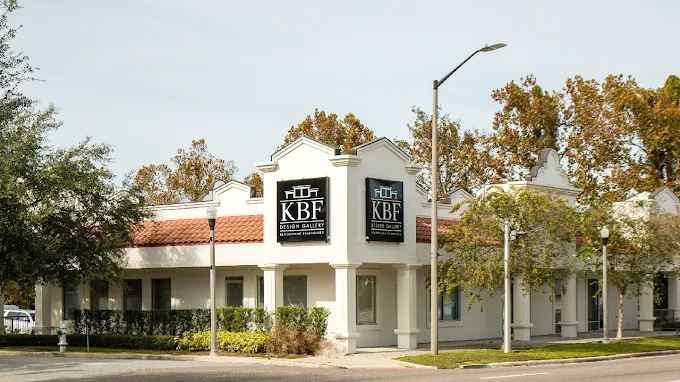
    KBF Design Gallery — the firm Datum is built inside of.

    Before Datum was a cohort, it was a method. A real story from a real business — one AI application built in a week that gave a designer nearly a quarter of her working year back.

    7hrs
    Per project on scope writing alone
    490hrs
    Per year consumed by one task
    23%
    Of her working year reclaimed
    20%+
    Increase in revenue capacity

    “Our lead designer was spending 7 hours per job writing scopes, estimates, and proposals — before a single design decision had been made.” At 70 projects a year, that's 490 hours on one repeatable task.

    Datum built a purpose-built app in one week that turns a short project conversation into scopes, pricing, proposals, storyboards, and selections. Her time went back to design — and revenue capacity rose over 20% with no new hires.

    Every business has a task like this hiding in plain sight. Datum helps you find it and turn it into a controlled workflow.

    KBF Design Gallery · Maitland, FL Architectural Digest · Excellence in DesignFlorida Design Seaglass Awards

    KBF Design Gallery building, Maitland, FL
    KBF · Maitland, FL
    Watch it work

    Watch the scope write itself.

    Sample output from the scope workflow Datum built inside KBF — the one that took a 7-hour task to about 30 minutes. Pick a project type and watch a reviewable draft assemble.

    Datum scope workflow · sample output 0.0s

    From a 20-minute project conversation: full kitchen, wall opening, island, new appliances.

    Illustrative sample, streamed in your browser — names and numbers aren't from a real client file. Every real run ends the same way: a draft with flags, reviewed by a human before it touches a customer.

    Build this for your business
    The tools we teach

    We teach the real tools. Claude. Codex. ChatGPT.

    Not theory — the same AI tools we run KBF Design Gallery on every day, set up with your business context.

    Anthropic

    Claude

    Your thinking partner for writing, analysis, and decisions — desktop and web, grounded in your company's context.

    Anthropic

    Claude Code

    The agent that does multi-step work on your computer: files, reports, research, and scheduled automations.

    OpenAI

    Codex

    OpenAI's agent for building and automating. We teach when to reach for it and how to review what it produces.

    OpenAI

    ChatGPT

    The everyday assistant most teams start with — used properly, with prompts and context that fit your business.

    Tools change monthly. The judgment we teach — what to trust, what to connect, where review belongs — doesn't.

    01

    Ground AI in your business context

    Give AI your company, voice, services, and constraints — so it stops answering generically.

    Clear inputs · source context · useful outputs

    02

    Know which tasks AI should handle

    Spot the admin drag and reporting work AI can take now — and the high-risk work to avoid.

    Better targets · fewer distractions

    03

    Set up Claude, Codex, and the stack

    Claude desktop vs. web, Claude Code, Codex, plugins, skills, and the settings that matter for real work.

    Setup · accounts · practical tooling

    04

    Prompt and meta-prompt effectively

    Write prompts that work, ask AI to improve them, and turn them into repeatable patterns.

    Better instructions · repeatable patterns

    05

    Connect your software stack to AI

    Files, spreadsheets, documents, browsers, business systems — and when manual review is the smarter bridge.

    Connect where useful · review where needed

    06

    Schedule AI work without you

    Daily briefings, weekly reports, research runs — with guardrails and review points built in.

    Daily briefings · weekly checks · review points

    07

    Run several AI agents in parallel

    Multiple sessions at once for research, reporting, and analysis — without losing the thread.

    Parallel work · visible progress · human control

    08

    Turn data into reports and apps

    Deep research, interactive reports, and lightweight prototypes from your own company data.

    Reports · prototypes · operating decisions

    Behind every workflow, the same operating pattern: what grounds the AI, what can fail, what gets logged, and where approval belongs.

    Source-backed KBF recognition and press
    Florida Design Seaglass Award 2025 Florida Design Seaglass Awards Orlando Magazine Home Design Awards badge Orlando Magazine Home Design Awards Best of Houzz award badge Best of Houzz Design recognition Parade of Homes 2025 award badge Parade of Homes Orlando recognition Orlando Business Journal Golden 100 badge OBJ Golden 100 Private company list Architectural Digest cover Architectural Digest Excellence in Design Florida Design Seaglass Awards Orlando Magazine Home Design Awards Best of Houzz Design recognition Parade of Homes Orlando recognition OBJ Golden 100 Private company list Architectural Digest Excellence in Design
    KBF Design Gallery showroom
    Who's teaching this

    Datum runs inside a real firm.

    Adam Vellequette and Ashley Sheaffer own and operate KBF Design Gallery — the design-build remodeling firm behind the recognition above. Everything Datum teaches is tested against KBF's real scopes, schedules, selections, and field work, on the same tools we run the company on: Claude, Claude Code, ChatGPT, and Codex.

    Meet Adam and Ashley
    Adam Vellequette, founder of Datum and KBF Design Gallery
    Founder · Datum · KBF Design Gallery

    Adam Vellequette

    Adam grew up in his family's remodeling business — demo in high school, then tile, cabinetry, and framing alongside KBF's tradesmen before moving into sales and operations. In 2021, he and his sister Ashley bought the company at $5.2M in revenue; by 2025 it reached $13.8M. Every bottleneck he solved along the way became part of the Datum method.

    Ashley Sheaffer, Datum collaborator and co-owner of KBF Design Gallery
    Datum Collaborator · KBF Design Gallery

    Ashley Sheaffer

    Ashley started at KBF as a receptionist straight out of college, earned her NKBA certification as a kitchen and bath designer, rose through sales management, and became co-owner alongside Adam in 2021. She knows the workflows from the ground up — which is exactly why she understands what AI should and shouldn't touch.